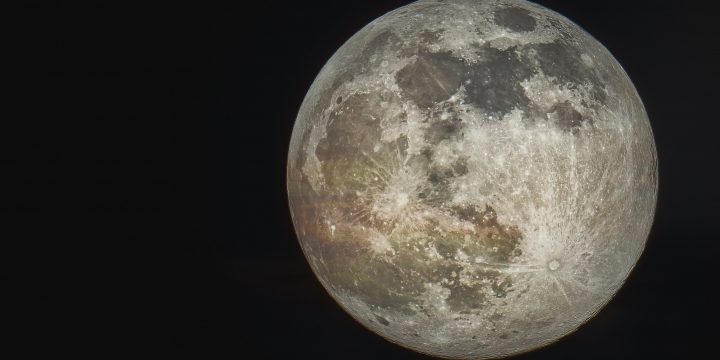
The January full moon is most commonly known as the Wolf Moon. Various North American tribes have different names for it, but names for this moon largely evoke coldness or lean times. The Algonquin people call it the "Sun has Not Strength to Thaw Moon, the Arapaho refer to the "When Snow Blows like Spirits in the Wind Moon, and the Lakota people use the most concise "Hard Moon." The only direct wolf reference I could find was from the Sioux people who call this moon the "Wolves Run Together Moon. Interestingly, the Farmer's Almanac doesn't cite any sources for the Wolf Moon name, it just refers to wolves howling this time of year. My favorite interpretation of the name relates it to the Wolf Trail or Road—a traditional Blackfoot name for…
If you were to look up names for the thirteen full moons in a year, you would almost certainly discover a fairly standardized list. The source of this list is almost always the Farmers’ Almanac, which popularized its “full moon names” in the 1930s. In turn, the most likely original source for the Almanac’s list is an earlier list entitled “Indian Month Names,” which was published in 1918 by Daniel Carter Beard in his The American Boys’ Book of Signs, Signals, and Symbols, for use by the Boy Scouts of America. Nearly every list of full moon names you find will have a vague description of the origin of the names as “American Indian,” with little or no explanation. (To their credit, the Farmers’ Almanac has recently updated their descriptions…
In many places June is the transition into summer. In much of the Northeast and Mid-Atlantic, it’s high strawberry season, and this traditional name is shared among the Dakota, Chippewa, and Ojibwe peoples. Similarly, the Haida call this the Berries Ripen Moon, the Lakota refer to the When Berries Are Good Moon, and the Mohawk have Ripening Time Moon. For many, this is the start of summer abundance. Picking and eating strawberries is the perfect way to celebrate! Strawberry, Rose & Mint Garden Cake I recently learned that garden centers in the UK often have cafes and serve cake and tea and it kind of blew my mind. There seems to be a general association between cake and gardens there that just doesn't exist in the US– but I fully…
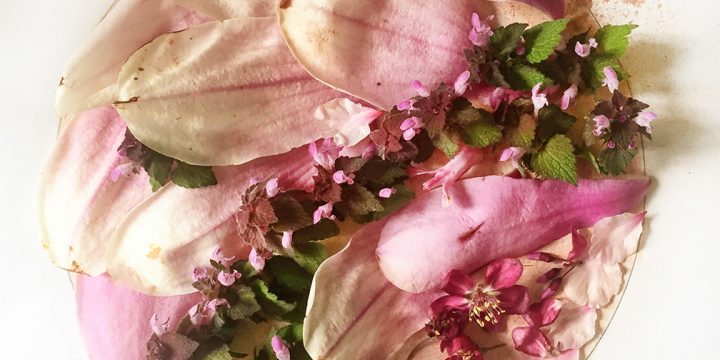
A great way to celebrate the Pink Moon is to go on a "pink" scavenger hunt and see how many bits of pink you can find creeping out after the winter. You may find some pink flowers, but pink is also in other unexpected places like leaves, sticks, and even insects! How many types of pink things can you find? Pink Moon Scavenger Hunt There are no checklists for this hunt, just look for things that are pink! They can be natural things like petals and leaves or anything else that's pink and catches your eye. You can take photos to keep track or physically collect some items. (Take care with natural items, plants are just starting over for the year so it's best to stick with things that have…
The October full moon is most often called the Hunter’s Moon in popular moon-name lingo. This name was cited in the Oxford English Dictionary in 1710 and is almost certainly European in origin. It is believed that this full moon came to be called the Hunter’s Moon because October was the time to go hunting to store up food for the cold winter ahead. Still, this name doesn’t resonate with me at all. In contrast, the Falling Leaves Moon is an Anishinaabe term referring to the seasonal changes in much of North America this time of year. The Abenaki call this moon the Leaf Falling Moon, the Arapaho use the Falling Leaves Moon, and the Lakota name is the poetic When the Wind Shakes Off the Leaves Moon. The Cree term…
“Green corn” is not corn that is the color green (although that’s a thing too), but simply sweet corn—that is, corn that is eaten fresh as opposed to mature corn that is dried and ground. It's the same reason we call green beans green-- it's not because they are the color green, but because they are eaten in an immature stage instead of being dried. You will still find older recipes that refer to green (fresh) corn, it's actually a fairly recent development. Green Corn Moon Microgreens It's much too late in the year to plant corn and grow ears of corn, but it's a great time to sprout ears of corn (the part you eat is a also a seed!) and grown microgreens. This is a fun experiment for…
Blue moons are slightly misunderstood. You see we have 12 months in our year, but there are 13 full moons. So each year there ends up being an "extra" moon in the western calendar. (This is not true of some other calendars.) If you are interested in this sort of thing, the way we got to the current western calendar is somewhat fascinating and insanely circuitous. But anyway, back to the moons, the extra moon doesn't always fall in same month and sometimes has it's own special name (like if it falls in September) but generally it gets called a blue moon. (Like the expression "once in a blue moon.") Why it's called a blue moon isn't abundantly clear, and according to astronomers the actually definition of a blue moon…
We love the book Thunder Cake by Patricia Polacco, especially during a good summer thunder storm. There is a cake recipe in that book of course, but being a celiac it wasn't very useful to me. Besides I was intrigued with the idea of making a cake that contained or was inspired by some food that had historically been associated with storms and lighting. I kept coming across references to truffles (the mushroom not the confection) in my search-- it would seem that the ancient greeks believed that they were born of Zeus' lightning bolts. Very poetic, but I wasn't sold on truffle cake... I considered copping out and doing candy truffles instead, but that didn't seem in the spirit of things. (As an aside there is a whole group of…
In spring we talk about spring showers, but that is a gentle kind of rain, whereas in summer it’s a wild downpour with huge fat drops of water and thunder and lightning, and it feels completely different. The science backs that up-- generally it rains the most frequently in spring, but the most rain falls in summer. There really are more thunderstorms in summer in temperate parts of the world– summer brings humid warm air up from the south, which then bumps into cooler, drier air from the north. Whenever two air masses meet like this the air becomes unstable. The cooler, denser air wedges itself under the warmer humid air and lifts it up. (Called an updraft.) As all that moisture rises up in the atmosphere, it begins to…