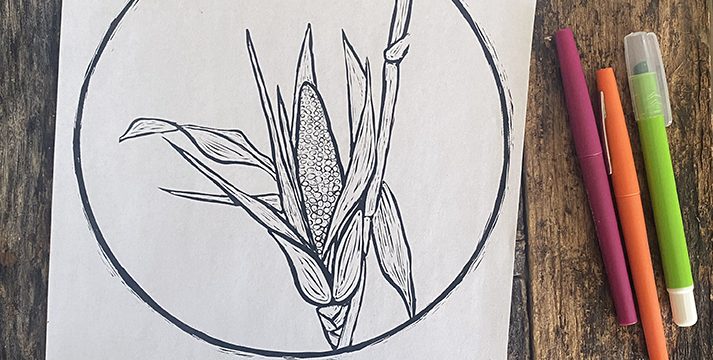
What is the Green Corn Moon & a Coloring Page

What is the Green Corn Moon & a Coloring Page

Folklore, Free Printable, Full Moon, Green Corn Moon, Learning, Play
The August full moon is frequently called the Sturgeon Moon. This is because sturgeon were often caught in the late summer in the Great Lakes. I don’t live in the Great Lakes area however, and sadly I have never even seen this cool fish. Instead I prefer to call this moon the Green Corn Moon because it better reflects what’s happening around me in August. Fields of corn are everywhere, and I can’t seem to eat enough of it. This name mirrors traditional names used by several tribes: (Green) Corn Moon is used by the Algonquin and Ojibwe, Harvest Moon is used by the Dakota, and Ricing Moon is used by some Anishinaabeg. All of these names make reference to gathering maturing crops. Several tribes in the southeast have Green…
Read More
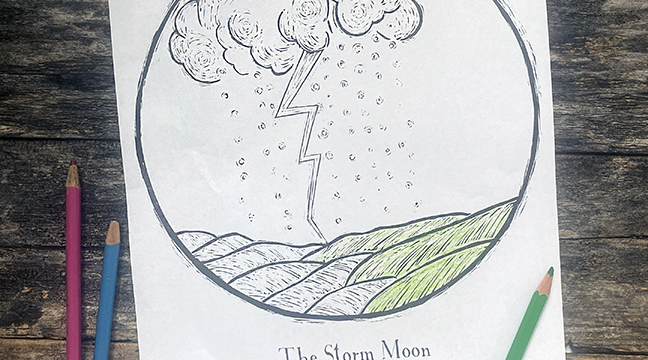
What is the Thunderstorm Moon & a Coloring Page

What is the Thunderstorm Moon & a Coloring Page

Folklore, Full Moon, Learning, Play, Thunder Moon
Many people call July’s full moon the Buck Moon because that’s the name that the Farmers’ Almanac has chosen, but the names found among sources (both Native American and European) are all over the place. There is no tribal citation for buck moon and I have not found any traditional sources for it. It refers to buck's growing their antlers in which is maybe a thing you notice this time of year, but I can't say I ever have, Of course, there are all kinds of different things happening in nature depending on where you live. Still, if a theme can be found among many July moon names, it’s probably berries, not bucks: Berry Moon from the Anishinaabe, Moon When the Chokecherries Are Ripe Moon from the Lakota and Arapaho, Red Berries…
Read More
What is the Strawberry Moon & a Coloring Page

What is the Strawberry Moon & a Coloring Page

Folklore, Free Printable, Full Moon, Learning, Play, Strawberry Moon, Summer
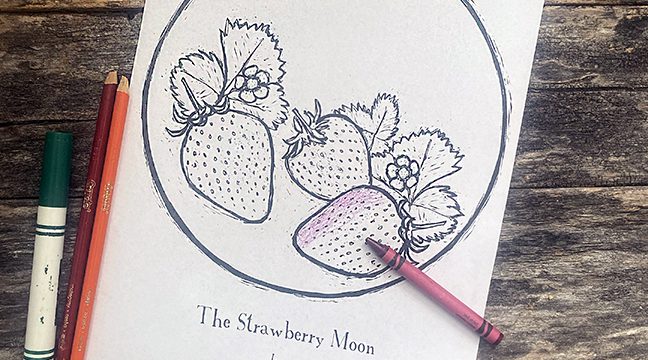
In many places June is the transition into summer. In much of the Northeast and Mid-Atlantic, it’s high strawberry season, and this traditional name is shared among the Dakota, Chippewa, and Ojibwe peoples. Similarly, the Haida call this the Berries Ripen Moon, the Lakota refer to the When Berries Are Good Moon, and the Mohawk have Ripening Time Moon. For many, this is the start of summer abundance. Eating or baking with strawberries is the perfect way to observe this moon! If this time of year is not full of ripening strawberries where you live, what else do you notice happening in nature? You can use my phenology tracker printable to record your nature observations and select a full name that makes sense for your area. Full moon names are…
Read More
What is the Flower Moon & a Coloring Page

What is the Flower Moon & a Coloring Page

Flower Moon, Free Printable, Full Moon
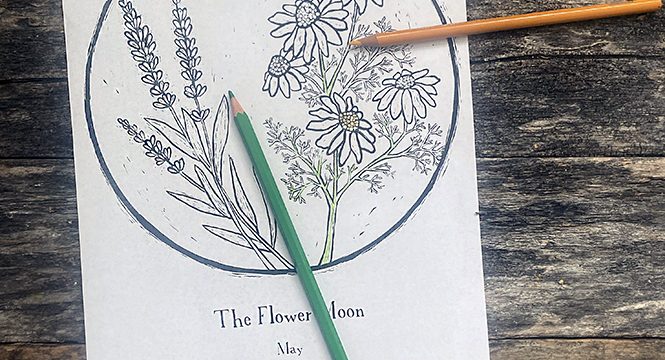
The May full moon is most often called the Flower Moon. “Flower Moon” is attributed to the Algonquin and Comanche peoples. The Anishnaabeg call May’s moon the Blossom Moon, and the Kalapuya are even more specific: Camas Blooming Moon. The Shoshone call this the Budding Moon. A common proverb in English-speaking countries asserts that “April showers bring May flowers!” It’s in May that many spring flowers start to appear, whether they are weeds in a lawn, cultivated flowers in a garden, or fleeting “spring ephemerals” in the woods. In most places May is a point in the spectrum of spring, and many of the full-moon names reflect that. Both the Choctaw and Creek tribes call this the Mulberry Moon, and the Arapaho call it When the Ponies Shed Their Shaggy…
Read More
What is the Pink Moon & a Coloring Page

What is the Pink Moon & a Coloring Page

Folklore, Full Moon, Pink Moon, Play, Scavenger Hunt, Spring
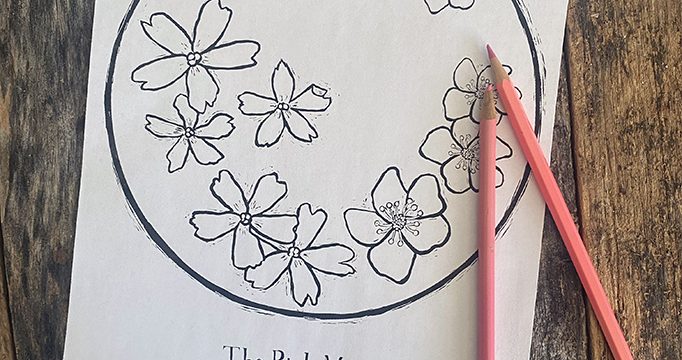
Many modern moon name lists suggest that the Pink Moon is named for the emergence of phlox subulata, or moss phlox, which is a native North American wildflower with pink flowers that blooms in April. However, I cannot track down a single actual source beyond the Farmer’s Almanac for this claim. (And the Farmer's Almanac does not expand on where this info came from which is unusual.) I do find that pink is everywhere this time of year—most welcome after a gray winter—so I've decided to roll with it. Moss phlox does, after all, bloom in April along with a host of other pink flowers like cherry blossom and spring beauty. That said, I wouldn't feel at all obligated to stick with this name because the phlox claim is weak at best. The Cherokee…
Read More
What is the Worm Moon & a Coloring Page

What is the Worm Moon & a Coloring Page

Folklore, Full Moon, Learning, Play, Worm Moon
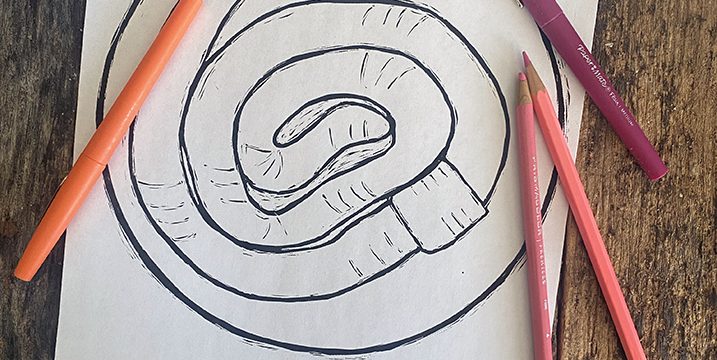
Jonathan Carver yet again is credited as the source of the name "Worm Moon", claiming it was a Dakota name. However, every Dakota resource I have found calls this full moon the Sore Eyes Moon, which refers to the glare of the sun off snow. (“Sore Eyes Moon” is how this moon’s name translates from the Lakota and Assiniboine dialects as well.) Allegedly, in the late 1700s, Jonathan Carver wrote that the worms actually refer to larvae that are emerging from winter hideouts around this time. Where I live in the Mid Atlantic, snow is receding in March, and spring is just starting to peek through. I often think of March as the muddy month. Worms make their first trip to the surface as the ground unfreezes and leave their little…
Read More
What is the Snow Moon & a Coloring Page

What is the Snow Moon & a Coloring Page

Craft Project, Folklore, Free Printable, Full Moon, Learning, Snow Moon, Winter
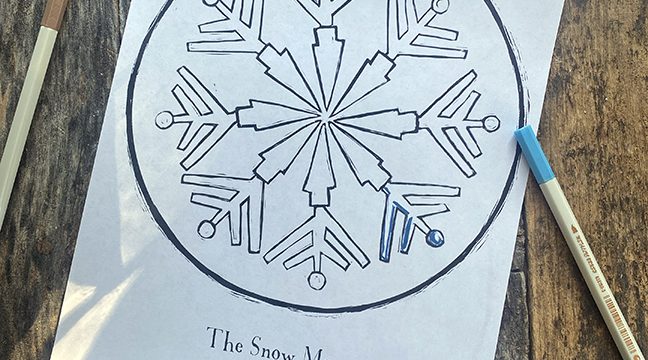
February is the snowiest month where I live, and according to the National Weather Service it’s the snowiest month nationwide. According to the Farmer’s Almanac’s list, this month’s full moon is called the Snow Moon based on the report of Captain Jonathan Carver, a colonial expedition leader who claimed the Lakota people called it that. The translation of the Lakota name that I have found is substantially more poetic: When Trees Crack Because of Cold Moon. Similarly, the Abenaki people observe the Makes Branches Fall in Pieces Moon. The Arapaho call this the Frost Sparkling in the Sun Moon, and the Comanche call it the Sleet Moon. I have continued to call it the snow moon because it's concise and easier to fit on graphics, but in my head I think…
Read More
Cold Ice Moons

Cold Ice Moons

Cold Moon, Craft Project, Winter
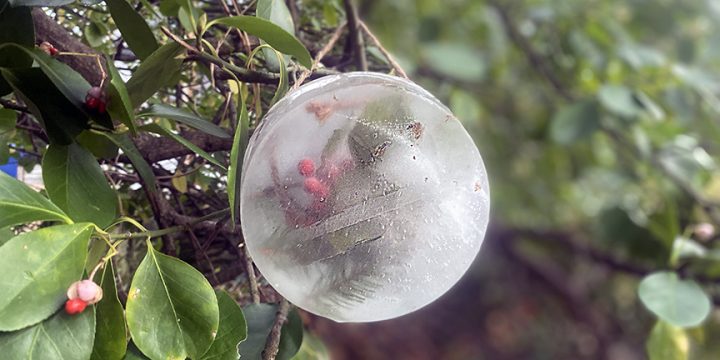
The Mohawk people call December the Time of the Cold Moon. December is the start of real winter for us here in the Mid-Atlantic, and many of this month’s full moon names reflect that. The Creek call this moon the Big Winter Moon, the Shoshone refer to the Winter Moon, the Abenaki call it the Winter Maker Moon, and the Oneida call this moon the It’s a Long Night Moon, which is relates to the Winter Solstice, which occurs this month and is in fact the longest night of the year. In my mind the Cold Moon is always linked to hibernation: animals are hibernating, and we humans spend more time inside, slowing down and getting cozy. It’s also the time we start to find things iced over. To celebrate…
Read More
“My Love for You is Like the Night Sky”

“My Love for You is Like the Night Sky”

Full Moon, get outside, Hike Ideas, Picture Book Hikes, Play, STEAM
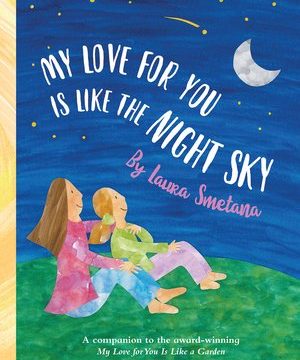
Picture Book Hikes are a fun and easy way to bring learning outside. Read a book (you can even read it outside!) and then enjoy the related hike, activity and snack suggestions! My Love for You is Like the Night Sky Written & illustrated by: by Laura Smetana My Love for You is Like the Night Sky is a lovely, lyrical story about how much a parent loves their kiddo. Gentle, spare text full of night sky and space metaphors, (glittering galaxies! full moons!) make this a fun book to introduce younger friends to moon phases, constellations, and the solar system. A perfect wind down/ bedtime book, Laura's beautiful illustrations could also be a jumping off point for a moon study. Thank you to Flying Cardinal Press for providing this book…
Read More
Full Moon Names & Phenology

Full Moon Names & Phenology

Full Moon, Full Moon Names, Learning
If you were to look up names for the thirteen full moons in a year, you would almost certainly discover a fairly standardized list. The source of this list is almost always the Farmers’ Almanac, which popularized its “full moon names” in the 1930s. In turn, the most likely original source for the Almanac’s list is an earlier list entitled “Indian Month Names,” which was published in 1918 by Daniel Carter Beard in his The American Boys’ Book of Signs, Signals, and Symbols, for use by the Boy Scouts of America. Nearly every list of full moon names you find will have a vague description of the origin of the names as “American Indian,” with little or no explanation. (To their credit, the Farmers’ Almanac has recently updated their descriptions…
Read More