Jonathan Carver yet again is credited as the source of the name “Worm Moon”, claiming it was a Dakota name. However, every Dakota resource I have found calls this full moon the Sore Eyes Moon, which refers to the glare of the sun off snow. (“Sore Eyes Moon” is how this moon’s name translates from the Lakota and Assiniboine dialects as well.) Allegedly, in the late 1700s, Jonathan Carver wrote that the worms actually refer to larvae that are emerging from winter hideouts around this time.
Where I live in the Mid Atlantic, snow is receding in March, and spring is just starting to peek through. I often think of March as the muddy month. Worms make their first trip to the surface as the ground unfreezes and leave their little piles of worm castings everywhere. Rain, worms and mud are all harbingers of spring, albeit less glamorous than singing birds and delicate flowers, and worm castings are tremendously good for the garden. The mud of spring not only allows things to grow, but it is a tremendous sensory experience for children, and learning about worms is as delightful to children as eating them is to robins. Because of this, I have stuck with the name worm moon, even though it’s not a historically accurate one. It does reflect my experience of this month, although I’ve considered mud moon and frog moon as well!
Some other traditional names include the Creek’s Little Spring Moon and the Passamaquoddy’s Spring Moon. The Hopi people call this the Moon of the Whispering Wind, and the Omaha speak of the “Little Frog Moon,” which feels very appropriate considering all of the amphibian movement and breeding happening around this time. The Ponca tribe calls this the Water Stands in the Ponds Moon, which makes me think of vernal ponds. The Shawnee refer to the Sap Moon, while the Ojibwe observe the Sugar Moon. One of my personal favorites is the Ojibwe Crow Comes Back Moon.
If this time of year is not muddy and full of worms where you live, what else do you notice happening in nature? You can use my phenology tracker printable to record your nature observations and select a full name that makes sense for your area. Full moon names are a type of phenology, which is a way to record what is happening in nature. People often think there is only one “proper” name for each month, when in reality there are tons. Different tribes in the US have different names based on what is happening in nature in their area, and there are also names from Europe and beyond. Find a moon name that resonates for you!
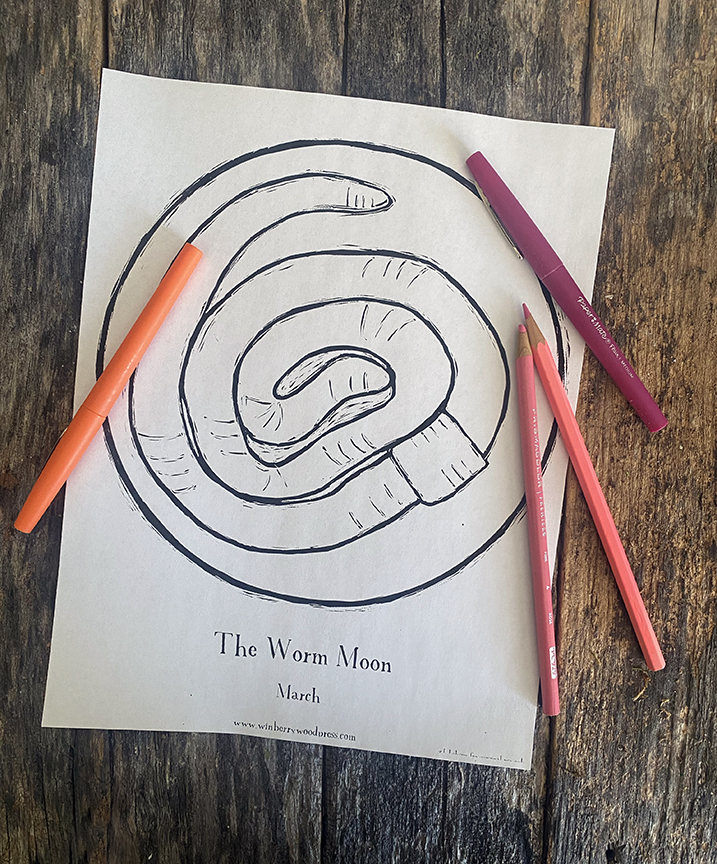
Worm Moon Coloring Page
Click on the image below to get the free printable! Find more fun snow moon crafts, activities and recipes here.
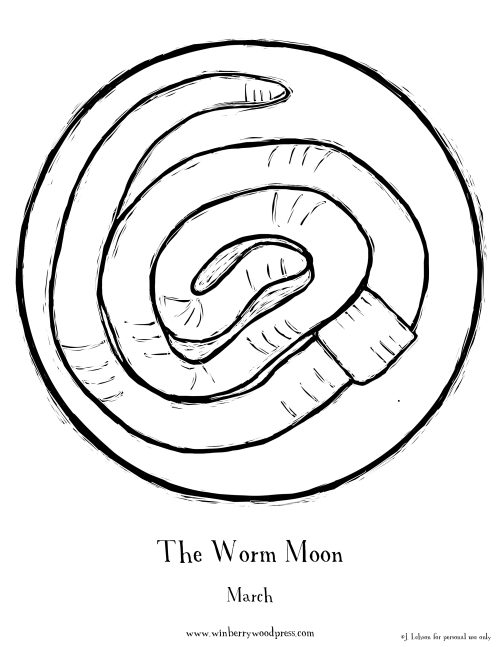
These coloring pages are drawn by hand by me. They are for personal use only. No ai please.